

Read Time: Less than 8 Mins
First Published: March 18, 2026
Imagine this: you’ve just sent an invoice for a completed milestone on a project.
The client is happy with the progress, the work is top-notch and your team is ready to move on to the next phase.
Just one problem: the payment is nowhere in sight, and you have several invoices outstanding.
You’ve sent the invoice, but weeks turn into months, and suddenly, you’re stuck waiting for cash that you need to cover payroll, pay subcontractors and buy materials for the next project.
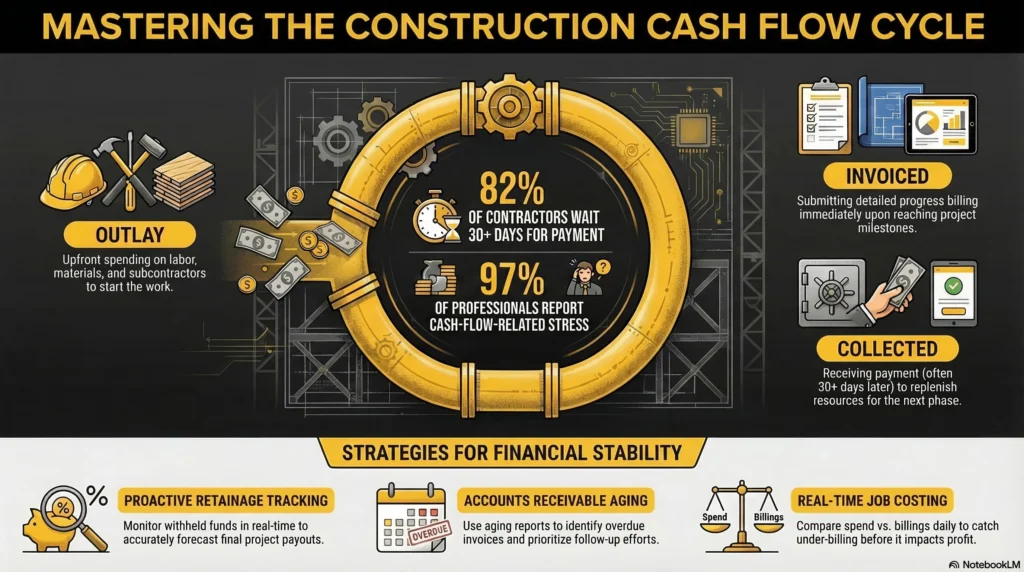
This is a story all too familiar to contractors, and it can put a serious strain on your business. In fact, according to The Chartered Institute of Building (CIOB), 97% of construction professionals experience stress due to slow payments and cash flow issues.
Cash flow is the lifeblood of any construction business. When it’s strong, contractors have the flexibility to take on new projects, invest in construction equipment and handle unexpected costs.
But when it’s inconsistent, it can create a ripple effect of financial instability across projects, payroll and operations.
A recent report by Rabbet revealed that 82% of contractors now face payment waits of over 30 days, a significant increase from just a few years ago.
In an industry where payment delays are common, proactive strategies for managing your cash flow aren’t just a good idea; they’re essential for survival.
Key Takeaways for Construction Contractors:
- Inconsistent payments can create a domino effect of financial strain, impacting everything from construction payroll to project bids.
- Contractors can take control of their cash flow by improving invoicing processes, effectively managing retainage and closely monitoring financial metrics.
- Integrated construction accounting software can automate cash flow management, offering real-time insights and proactive reporting to prevent financial crises.
What is Cash Flow?
Cash flow tracks how money moves in and out of your construction business as you pay for labor, materials and day-to-day operations.
Positive cash flow means more money is coming in than is going out, which is a sign of a healthy, growing business.
Negative cash flow, on the other hand, means you’re spending more than you’re earning, which can lead to debt and a lack of resources to fund your operations.

Why Does Cash Flow Matter in Construction?
Construction companies rely on steady cash flow to cover payroll, pay subcontractors and keep projects moving forward without delays.
Payments are often tied to project milestones and can be held up by a number of factors, including disputes, slow approvals and retainage.
This instability makes it especially important to have a clear understanding of your finances at all times.
Additionally, in the construction industry, it’s rare for a single payment to cover an entire job; instead, companies operate on multi-payment schedules tied to project milestones.
This means that when a payment is delayed, it can trigger a domino effect of delayed payments for every subsequent milestone, leaving you with multiple invoices unpaid.
By focusing on cash flow analyses, you’re not just looking at a single number; you’re getting a clear picture of your company’s financial health, which is crucial for making informed decisions.
How to Improve Construction Cash Flow: 4 Proven Strategies
Contractors improve cash flow by building strong systems before invoices are ever sent.
It’s about setting up a system that ensures money moves through your business as smoothly and quickly as possible.
Here are four key strategies to help you get started.
1. Streamline Your Invoicing and Billing
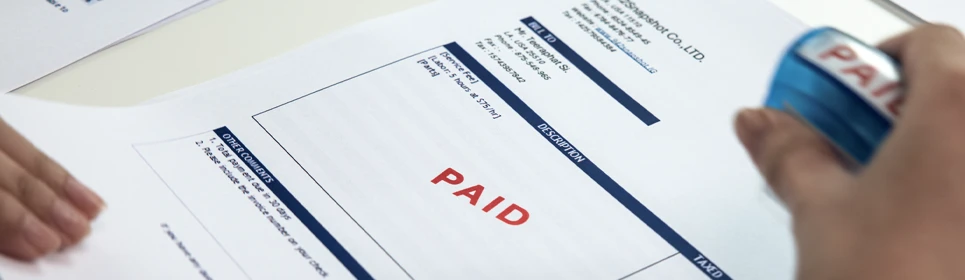
Contractors speed up cash flow when they send clear, accurate invoices as soon as work is completed.
Your invoices should be clear, detailed and easy to understand. Vague descriptions or missing information can be a reason for clients to delay payment.
Don’t wait until the end of the month to send an invoice, especially when using progress billing tied to project milestones. As soon as a milestone is reached or a billing period ends, send that invoice out.
The faster you bill, the faster you get paid, as you’re giving the client less opportunity to hold up payment according to ConstructConnect.
Establish clear payment terms from the start, such as Net 30 or Net 60, and don’t be afraid to follow up politely but persistently. A simple email or phone call can often resolve a delayed payment and help you manage your cash.
2. Take Control of Your Retainage
Retainage is the portion of a project’s payment held back until the work is complete, which is a major hurdle for cash flow.
Make sure you fully understand your client’s retainage policy before the project begins.
Track retainage amounts in real-time with construction KPIs as the project progresses. Knowing exactly how much money is being held back allows you to accurately forecast your cash flow and prepare for final payment requests.
Complete all necessary documentation on time to avoid delays in receiving your final retainage payment.
3. Use Financial Reports as a Warning System
Financial reports highlight cash flow issues by showing which invoices are overdue and where payments are getting stuck.
Your financial construction reports, particularly the Accounts Receivable Aging Report, are your best tools for monitoring construction cash flow statements.
An aging report breaks down outstanding invoices by how long they’ve been due. By regularly reviewing this report, you can identify which clients are past due and prioritize your follow-up efforts.
4. Take Advantage of Job Costing for Project-by-Project Analyses
Job costing protects cash flow by helping contractors catch underbilling and overbilling before they impact project profitability.
Beyond simply tracking outstanding invoices, a proactive cash flow strategy involves monitoring your financial health on a project-by-project basis.
Powerful job costing tools can give you a real-time look at how much you’ve spent versus how much you’ve billed on each project, helping you spot under-billing issues before they become a cash flow problem.
Getting a real-time pulse on your job costs ensures that you are billing correctly and consistently for the work you’ve done, helping to keep your cash flowing and your projects profitable.
How Can Accurate Budgets Keep Cash Flow Accurate?
Accurate budgets stabilize cash flow by helping you plan when money goes out and when it should come in.
Beyond simply managing incoming payments, maintaining consistent cash flow requires proactive planning.
One of the most effective ways to do this is by creating and sticking to accurate budgets. A realistic budget acts as a financial roadmap for your project, and supports cash flow forecasting by outlining when costs and revenue are expected.
When your actual costs align with your projected budget, you can more confidently manage cash coming in and going out.
This helps you avoid unexpected financial surprises and ensures you have the necessary funds available to cover upcoming costs and keep your project moving forward without interruption.
How Does Construction Accounting Software Optimize Construction Cash Flow?
Implementing these strategies is far easier with the right tools.
While a basic spreadsheet might help you track a few invoices, it won’t give you the comprehensive, real-time insights you need to truly optimize your cash flow.
Construction accounting software improves cash flow by automating billing, tracking payments and giving you real-time financial visibility.
A robust cloud-based accounting software offers powerful features designed to help you proactively manage cash flow:
- Cash Flow Reports that give you a direct overview of your cash inflows and outflows, so you can make informed decisions about future spending.
- Customizable dashboards that monitor your construction budget and highlight potential cash flow issues at a glance.
- Automated construction billing reporting options that deliver real-time insights into your Accounts Receivable and Work-in-Progress (WIP), so you can spot and address payment delays immediately.
- Real-time data access from the office and the field, ensuring that billing information and expenses are captured accurately and instantly.
- WIP and job costing reports that provide a clear picture of what you’ve billed versus what you’ve spent on each project, preventing costly underbilling and overbilling.
By automating tasks and providing a clear, real-time view of your finances, you can move past manual data entry and focus on what you do best: running your business.
Keep Cash Flowing With FOUNDATION®
Understanding and proactively managing your cash flow is one of the most effective ways to improve construction profitability and strengthen your decision-making.
By leveraging the right accounting software for construction, like FOUNDATION, you can turn everyday data into insights that drive business success.
Whether you’re focused on monitoring cash flow, job profitability or labor efficiency, FOUNDATION provides a clear view through its powerful dashboards.
FOUNDATION construction accounting software can help you track, analyze and act on the metrics that matter most.
Chat with a specialist today to learn more!
Share Article
Make Your Inbox Smarter
Keep on current news in the construction industry. Subscribe to free eNews!
Related Articles
ConExpo 2026: The Biggest Takeaways and What They Mean for Your Business
ConExpo 2026 brought together the construction industry in Las Vegas for one of the biggest trade shows the industry has
Learn More

Create Custom Construction Reports With FOUNDATION® and DataGenie™
Construction accounting generates an enormous amount of data. Job costs, labor, equipment, billing, compliance and reporting all flow through the
Learn More
Our Top 3 YouTube Videos
Learn about our software more in depth with product overviews, demos, and much more!

ACA & W-2 Services
Our ACA reporting & e-filing services include official 1094-C and 1095-C IRS reporting, optional e-filing (no applying for a TCC code required), mailing to your employees and experienced support to help you.

Client Testimonials
There are plenty of reasons to make FOUNDATION your choice for job cost accounting and construction management software — just ask our clients!
Product Overviews
From job cost accounting software, to construction-specific payroll. Get an overview on your next all-in-one back-office solution.